
Affordable insurance starts with an easy quote
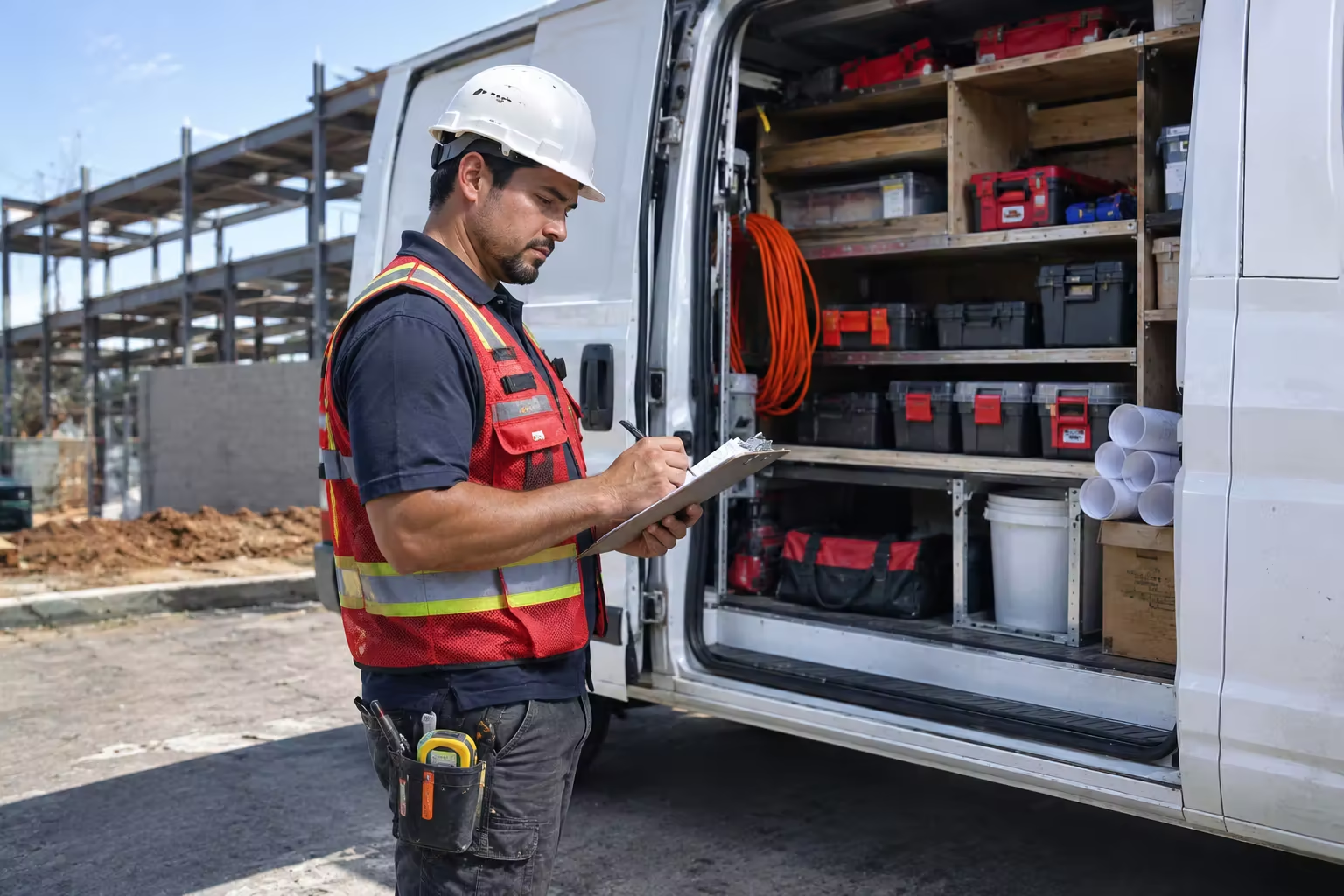
The right setup depends on what you own, where it goes, how it is stored, and what your contracts require. A coverage review can compare those details with the policy you have.
Inland marine is often reviewed alongside commercial property, commercial auto, builder's risk, and ocean marine. This page covers the coverage decision, cost factors, installation exposures, and what to have ready for a quote.
For business property, not a fixed building: this page is about property that moves or sits away from your main location. For a building and its contents at one address, start with business insurance and ask about commercial property.
Most property policies are built around a location. Inland marine follows the property instead. That difference matters when a tool trailer crosses a state line. It matters when materials wait at a customer site. It matters when equipment is installed after it leaves your shop.
The name dates to marine policies that covered goods moving by water. Inland marine extended that idea to property moving over land. Today the coverage is used for mobile business property, not just cargo.
It is not a substitute for commercial property, commercial auto, builder's risk, or ocean marine. It is separate coverage to review when the property leaves the place your main policy protects. Some businesses need more than one policy; others need only one.
Consider a coverage review if your business answers yes to any of these questions.
Contractors, trades, equipment rental operators, installers, distributors, and service businesses are common buyers. Construction and trades are where the exposure is easiest to see.
Inland marine coverage can be written in different ways. A scheduled policy lists specific items and values. A blanket policy may cover a group of property up to a limit. The policy wording, limits, deductible, and exclusions control what is covered. A deductible is what you pay before the policy responds.
Hand tools, power tools, and portable equipment used at jobsites or moved between locations. Check whether items are scheduled or subject to a per-item limit, and confirm that the policy follows the property to each jobsite.
Materials and supplies moving by truck or van to a jobsite, customer, or storage location. Property in transit depends on how it is packed and carried, who arranges the shipment, and which policy is expected to respond.
Property held at a temporary location, warehouse, or staging area. Confirm the storage location, any time limit in the policy, and whether the limit applies per location or per loss.
Materials and equipment waiting to be installed or in the process of installation at a customer location. This is a common need for contractors and specialty trades, and the project contract often names the limits and documents the customer expects.
Larger tools, machinery, and equipment used by contractors. Owned, rented, leased, or borrowed equipment may be treated differently, so list each item and confirm who is responsible for insurance.
Property in your care, custody, or control while you work on it. This is not automatic on every policy. Ask before you rely on it, and confirm whether the customer's own policy is expected to respond first.
Ask three questions about each item: where it goes, who owns it, and what value the policy should use. A tool in a shop, a tool in a truck, and a tool installed at a customer site can sit under different coverage parts. The schedule should match the way the property actually moves.
Replacement cost and depreciated value can produce very different limits. A current equipment list with serial numbers, purchase dates, and values makes the review more useful. If the list changes often, ask whether a blanket limit or a scheduled approach fits better.
The table below is a planning aid, not a substitute for policy wording. Limits, triggers, and exclusions come from the policy and the contract.
| Coverage | Inland marine | Commercial property | Builder's risk | Motor truck cargo |
|---|---|---|---|---|
| Main property | Movable business property | Fixed property at a named location | Project under construction | Cargo in a trucking operation |
| Typical examples | Tools, equipment, materials in transit, temporary storage, installation, bailee property | Building, contents, business personal property at the location | Materials, work in progress, soft costs at the project | Freight or cargo in transit for a trucking business |
| Trigger to review | Property leaves the main location or is stored off site | Property stays at one location | Construction or renovation project | Trucking or freight operation |
| Common gap | Items not scheduled or over the limit | Property away from the location | Completed work or property after the project | Non-trucking business property |
Ocean marine insurance is the waterborne counterpart. It handles cargo and vessels moving by sea or inland waterways. Inland marine handles land transit and movable property, while builder's risk insurance covers a project under construction. Some businesses need both; many need only one.
The name can be misleading. These boundaries cause the most confusion.
Fixed property at one location. Commercial property is the usual policy for a building, contents, and business personal property that stays at a named location.
Licensed road vehicles. Commercial auto is the usual policy for owned, hired, and non-owned vehicles used in business.
Ocean cargo and vessels. Ocean marine handles waterborne cargo and vessel exposures.
A project under construction. Builder's risk is built around materials, work in progress, and soft costs at the project site.
Wear and tear, maintenance, or gradual deterioration. Many property policies respond to sudden, accidental loss, not ordinary aging.
Employee dishonesty or theft by an employee. That is a separate crime or fidelity coverage, not a standard inland marine exposure.
Some policies can be changed by endorsement to add certain property. The endorsement wording and limits matter. Ask before assuming a gap is covered.
A commercial property policy may still respond to some property away from the location for a limited time or limit. That is not the same as a dedicated inland marine schedule. Read the extension carefully before you rely on it.
There is no single price for inland marine insurance. A quote that ignores the property and exposure is guessing. Premiums are usually based on the values you insure and the work behind them. A small scheduled tool list looks different from a blanket equipment schedule that travels across several states.
What moves your number up or down:
Cost is not the only comparison point. A lower premium can come with a higher deductible, a narrower schedule, or a limit that does not match the equipment's replacement cost. Review the values and terms together.
A blanket limit can be useful when the property list changes often. A scheduled approach can be clearer when the equipment is high value or the customer requires specific items to be listed. The right choice depends on how the business actually moves property.
Dream Assurance can compare options from multiple carriers, but the right coverage and final price depend on the policy terms and the carrier's review. A quote is a starting point, not a policy, and the completed application can change the terms.
Ready to review the property list? Start with a coverage review, or call to talk through what moves and where it is stored.
Request a quote Call 618-657-7525An installation floater is a type of inland marine coverage for materials and equipment that will be installed at a customer location. It can apply while the property is in transit, waiting to be installed, or in the process of installation.
Built around property that is being installed after it leaves the supplier or contractor. It is common in construction, mechanical, electrical, and specialty trades. Ask which policy responds at each stage: in transit, in storage, during installation, and after installation.
Built around a project under construction, including materials, work in progress, and soft costs at the project site. It is not the same as coverage for tools that travel between jobsites or materials waiting at a customer location.
The handoff between policies is where gaps appear. Installation floater coverage is property coverage, not liability coverage for work you have already completed. Keep the two separate.
Ask for the project's insurance requirements early. The contract may name the property that must be covered, the limits, and the documents the customer expects. Those details belong in the same conversation as the installation schedule.
If your contract requires coverage for materials during installation, review the insurance clause and the project documents together. Review builder's risk insurance when the exposure is the project itself.
Contracts often include insurance requirements. A certificate shows the coverage that was reported when it was issued, not the policy itself.
If a contract asks for specific wording or limits, compare the request against the policy before work starts. A certificate holder is not automatically added to your policy.
Existing clients can start standard requests through the self-service certificate of insurance portal. For coverage questions behind a request, start with certificate of insurance support.
A complete starting point helps an agent review the operation instead of treating it like a generic account. Bring the following:
Review Tools and equipment. A list with values, serial numbers for high value items, and rented or borrowed equipment.
Check Locations and storage. Where property is stored, how long it stays there, and any separate location limit.
Bring Transit and delivery patterns. How materials move, who arranges the shipment, and whether work crosses state lines.
Review Installation or bailee exposures. Materials waiting to be installed, work in progress, and customer property in your care.
Check Contracts and certificates. Insurance clauses, certificate-holder details, requested wording, and deadlines.
Bring Current insurance and history. Policy documents, limits, deductibles, prior claims, loss history, and the renewal date.
Use consistent values, note serial numbers for high value equipment, and flag property that travels outside your usual service area. If the list changes often, ask whether a blanket limit or a scheduled approach fits better.
Dream Assurance is an independent insurance agency in Overland Park, Kansas. We can compare coverage options from multiple carriers, review the property schedule and limits, and explain the gaps between the policy and the work you do.
Comparing inland marine insurance companies starts with the coverage terms, not just the premium.
Dream Assurance is licensed in 30+ states, and the agency serves clients where it and its producers hold or renew applicable insurance licenses. Coverage availability, carrier access, and policy options may vary by state, coverage type, underwriting requirements, and carrier appointment.
If you want to talk the details through first, talk with our team and bring your current policy, property list, and loss history.
Experience the confidence shared by clients who trust Dream Assurance for insurance guidance. Let us help turn your property, transit, and installation details into a clearer coverage review.





Inland marine insurance is business property coverage for items that move or sit away from your main location. It can cover tools, equipment, materials in transit, temporary storage, and materials waiting to be installed at a customer site.
Depending on the policy, it can cover tools and equipment, materials in transit, property in temporary storage, installation floaters, contractors equipment, and bailee or customer property. The schedule, limits, deductible, and exclusions control what is covered.
It usually does not replace commercial property, commercial auto, builder's risk, or ocean marine. It also does not cover wear and tear, maintenance, or employee dishonesty. Some policies can be endorsed to add certain property.
Contractors, trades, equipment rental operators, installers, distributors, and service businesses often need it when tools, equipment, materials, or customer property leave the main location. The need depends on what you own, where it goes, and what your contract requires.
The premium depends on the values you insure, the limits, the deductible, the transit and storage exposure, the territory, and the claims history. A lower premium can come with a higher deductible or a narrower schedule, so compare the terms together.
No. Builder's risk is built around a project under construction, including materials and work in progress at the project site. Inland marine can cover movable property, including an installation floater for materials being installed at a customer location.
No. Commercial property is built around fixed property at a named location. Inland marine follows property when it moves or sits away from that location. Some businesses need both policies for different exposures.
It can, depending on the policy and schedule. Check whether tools are scheduled, whether a per-item limit applies, and whether the policy covers property at a jobsite, in transit, and in temporary storage.
An installation floater is a type of inland marine coverage for materials and equipment being installed at a customer location. Rented, leased, or borrowed equipment may be covered depending on the policy, so list each item and confirm who is responsible for insurance.
The name comes from early marine policies that covered goods moving by water. Inland marine extended that idea to property moving over land. Today the coverage is used for mobile business property, not just cargo.