
 Kevin Morrissy

By Dream Assurance Group · Reviewed by Kevin Morrissy
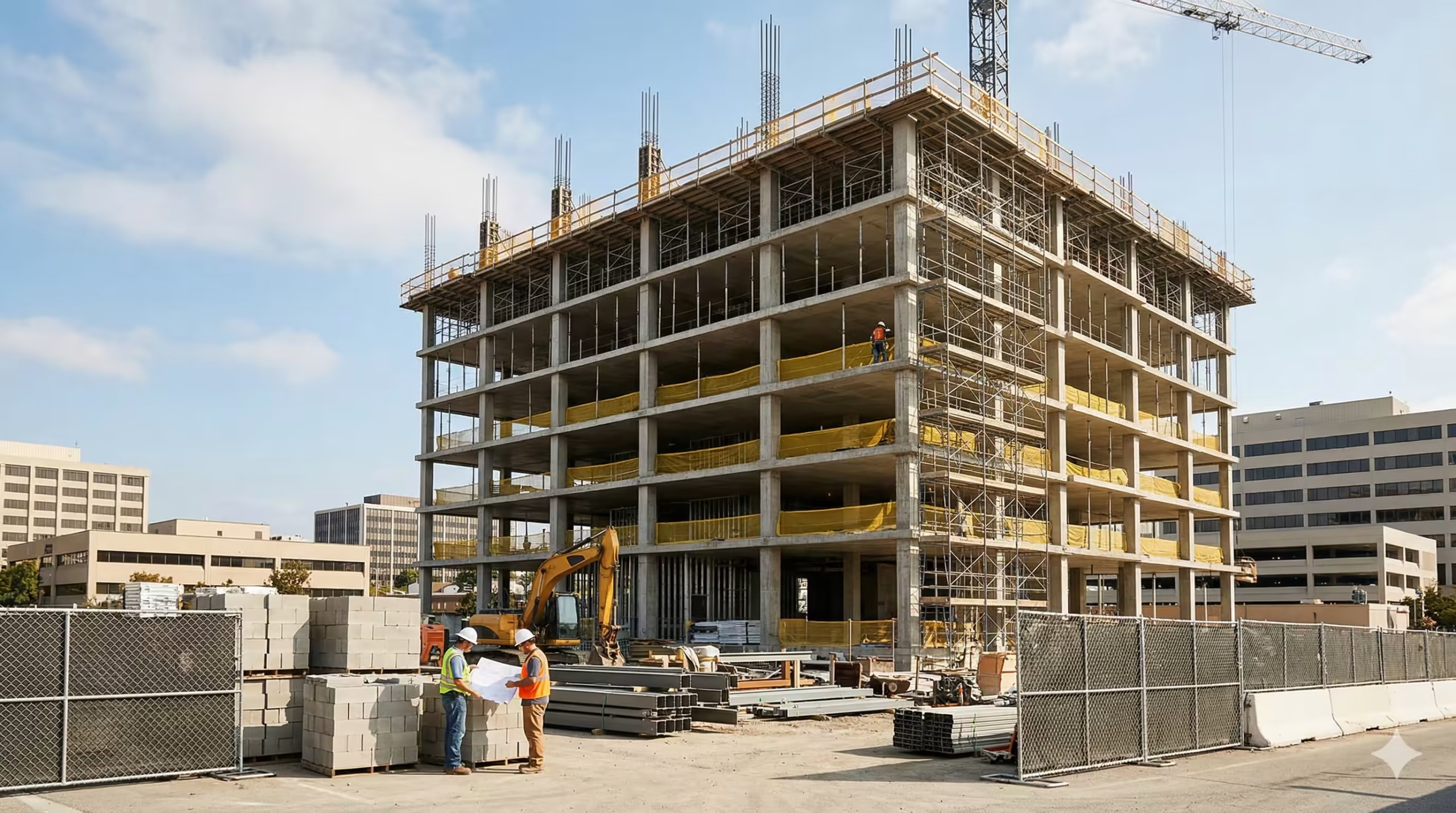
Builder’s risk insurance is a temporary property policy that covers a building while it is under construction or renovation, along with the materials and supplies that will become part of it. It pays to repair or replace the work if fire, wind, hail, theft, vandalism or another covered cause damages it before the project is finished. The owner, developer or general contractor buys it, it typically costs 1% to 4% of the project’s hard construction cost, and it ends when the building is completed and occupied.
How does builder’s risk insurance work?
A standard property policy insures a finished, occupied building; it will not cover one that is half framed with lumber in the yard. Builder’s risk, also called course of construction insurance, fills that gap for the duration of the build.
The policy is written for a specific project and term, with a limit equal to the completed value. If a covered loss happens during the term, it pays to put the work back so the project can continue; when the project is done, a permanent property policy takes over.
What does builder’s risk insurance cover?
Covered property is the structure under construction, materials and supplies on site intended for the project and, depending on the form, materials in transit or off-site storage, temporary structures and soft costs after a covered delay. Covered causes of loss on most forms include fire, lightning, wind, hail, explosion, theft, vandalism and collapse during construction.
The form and endorsements matter most for transit, storage, soft costs and existing structures. Our guide to what builder’s risk covers and excludes goes through each item with example claims.
What does builder’s risk insurance not cover?
The policy has a narrow job, and the common exclusions follow from it:
- Injuries to employees (workers’ compensation) and to third parties (general liability).
- Contractor tools and equipment, which need an inland marine floater.
- Faulty workmanship, design or materials, though resulting damage to other covered property may be covered.
- Wear and tear, rust, mechanical breakdown and, on most forms, flood and earthquake unless added.
Who buys builder’s risk insurance?
One party buys the policy and everyone else with a financial interest is named on it. On most lender-financed projects the owner buys it, with the lender as loss payee and the general contractor as an additional named insured; on design-build and many residential projects the contractor buys it and bills it into the job. The contract should say which, so the project is not insured twice or not at all. Our who buys builder’s risk insurance post explains the owner, contractor and lender roles.
When does builder’s risk coverage start and end?
Coverage starts on the policy’s effective date, which should be no later than the day materials first arrive. It ends at the earliest of policy expiration, completion and acceptance, occupancy or intended use, or the permanent property policy taking effect. Occupancy catches people out: moving a tenant into one finished floor can end coverage on the whole project. Our when builder’s risk coverage starts and ends guide covers the triggers, extensions and phased projects.
How much does builder’s risk insurance cost?
Typically 1% to 4% of the project’s hard construction cost for the full term, paid once up front, so roughly $4,000 to $16,000 on a $400,000 home. Construction type, location, project length, deductible and endorsements decide where a project falls. Our builder’s risk insurance cost guide breaks down the rate, the pricing structures and how to lower the premium.
Does a renovation need builder’s risk insurance?
Usually, yes. The owner’s existing property policy may exclude damage arising from construction work and will not cover the new improvements. A renovation builder’s risk policy covers the improvements and, if you choose, the existing structure. Our builder’s risk for renovations post covers occupied buildings and tenant improvements.
How does builder’s risk fit with other construction insurance?
Builder’s risk protects the project. These policies protect the people and the business doing the work:
- General liability covers injury to third parties and damage to property that is not the project.
- Workers’ compensation covers injured employees.
- Inland marine covers tools, equipment and materials in transit that the builders risk form does not.
- Commercial auto covers trucks and trailers.
Our construction insurance and contractor insurance pages show how the full program is assembled.
Get builder’s risk coverage for your project
We write builders risk for owners, developers and contractors and check the contract and lender requirements so the right parties are named before the first delivery arrives. Start with our builder’s risk insurance page or request a quote. Dream Assurance Group is an independent agency in Overland Park, Kansas, licensed in 36 states. Email info@dreamassurancegroup.com with questions.
Frequently asked questions
What is builder’s risk insurance in simple terms?
It is property insurance for a building that is not finished yet. A regular property policy covers a completed, occupied building; builder’s risk covers the structure and materials while construction or renovation is still underway. If fire, wind, theft or vandalism damages the work before completion, the policy pays to repair or replace it so the project can go on. It is temporary and ends when the building is complete and in use.
Is builder’s risk the same as course of construction insurance?
Yes. Course of construction insurance, COC insurance and builder’s risk insurance are different names for the same product: a temporary property policy covering a building and its materials during construction. Some insurers and lenders use one term and some the other. The coverage, the parties named and the pricing work the same way regardless of the label.
Does builder’s risk insurance cover the contractor’s tools?
No. Builder’s risk covers the structure being built and the materials that will become part of it, not the equipment used to build it. Tools, machinery, generators and rented equipment need a contractor’s equipment or inland marine floater, which covers them on the jobsite, in transit and in vehicles. This is one of the most common gaps on a project, so contractors should confirm their tools are insured separately.
Is builder’s risk insurance required?
No law requires it, but nearly every construction lender does, and most construction contracts assign one party the obligation to buy it. Lenders require it to protect their collateral while the building has no permanent property insurance. Even without a lender, an owner or contractor funding a project is exposed to the full value of the work until completion, so the coverage is treated as standard practice on any build of meaningful size.
Does builder’s risk cover liability if someone is injured on the site?
No. Builder’s risk is first-party property coverage and pays only for damage to the project itself. Injuries to workers are covered by workers’ compensation, and injuries to visitors or damage to other people’s property are covered by general liability insurance. A complete construction insurance program carries all three, plus inland marine for tools and commercial auto for vehicles.